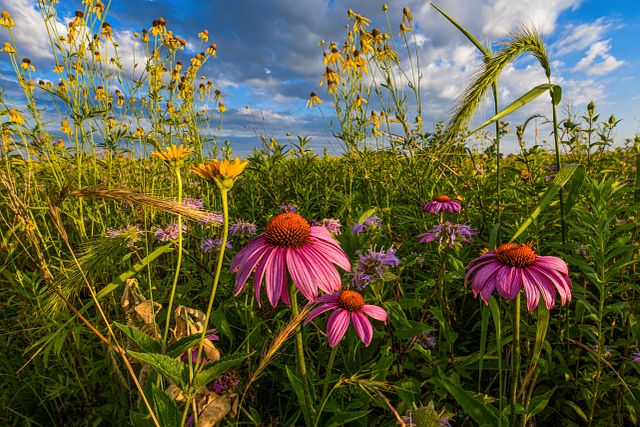
Pollinators are essential to healthy ecosystems, plentiful harvests, and resilient economies. These unsung heroes make up one out of every three bites of our food supply. Without them, over a third of the world’s food crops wouldn’t grow.
But when hurricanes, floods, or conflict wipe out the plants pollinators rely on, colonies can starve within days—creating ripple effects that threaten everything from beekeepers’ livelihoods to food production and prices.
Led by scientists and informed by local realities, Greater Good Charities’ pollinator programs fill critical gaps—rescuing colonies, supporting beekeepers’ livelihoods, and protecting our food security. We do this by:
- Mobilizing Aid & Global Partners
Guided by what’s happening on the ground, we collaborate with major food-producing partners like Cargill and Mann Lake to source emergency nutrition for pollinators. While sourcing aid, our logistics teams activate regional hubs, load trucks with syrup and pollen substitutes, and deliver aid into affected communities fast.
- Collaborating at the Local Level
Every step is informed by local needs—ensuring support reaches those who need it most, when and where they need it. - Providing Infrastructure Support
We assist with the repair or replacement of damaged hives, equipment, and facilities so that beekeepers can resume operations and avoid economic collapse after a crisis.
- Repopulating Pollinators
We supply queen bees and bee packages so beekeepers can restore colonies—reducing long-term loss and restoring essential pollination capacity.
Filling Gaps in the Wake of Disaster
In 2018, when Hurricane Michael devastated the Florida Panhandle, it destroyed millions of acres of natural forage, leaving countless bee colonies without food. We recognized this critical gap—no one else was stepping in to address the immediate threat to pollinators—and quickly mobilized emergency sugar syrup and pollen substitute directly to impacted beekeepers.
Our response helped protect one of the country’s most valuable citrus-producing regions from long-term disruption. It also laid the foundation for what is now one of the largest, most impactful pollinator response programs in the world.
Among those affected was Studier Apiaries, which lost one-third of their hives. Its owner told us, “My family’s been in the bee business for a long time. My dad, now me, my son, and we got grandchildren that are going to be fourth generation beekeepers. So, we need to protect the bees and stay with the bees because the environment needs the bees really bad.”
Working with the Florida State Beekeepers Association, our teams mobilized emergency food for Studier Apiaries and countless other operations across the region, ultimately providing enough supplies to help feed over a billion bees, sustaining beekeepers’ livelihoods and protecting our food supply.
When Hurricanes Helene and Milton struck in 2024, we mounted our largest disaster response to date, spanning five states and providing humanitarian and animal aid, food, water, and pollinator rescue.
Our partner, Hoopers Creek Bee Company, became a communication and resource center, where members of the community were able to access donated essentials –– and North Carolina beekeepers could get resources to rebuild their bee colonies.
The owner of Hoopers Creek described the profound devastation in the area: “Folks that come through…they see where the destruction of the landslides was. But they don’t understand that there used to be houses there, and there used to be people that we know there. They’re just gone.”
In collaboration with local businesses, our teams mobilized with enough food to save over 10 billion bees across Georgia, Florida, South Carolina, and North Carolina. This massive effort protected not only the livelihoods of countless beekeeping families, but also the pollination of crops that feed millions.
Supporting Beekeepers in Ukraine
Saving pollinators in the wake of disasters also informs how we do similar work in complex crisis zones.
As conflict continues to devastate Ukraine, beekeepers and their vital pollinators face unprecedented challenges—from destroyed forage and contaminated landscapes to the loss of hives and displacement of entire families.
Olesya and Vadim are some of the many beekeepers whose lives have been upended by this conflict. When their village was occupied, Olesya, Vadim, and their two young children were forced to hide in a small underground shelter. They were trapped with seven other family members, battling extreme cold but unable to start a fire for fear of being discovered.
Eventually, they evacuated, leaving everything behind.
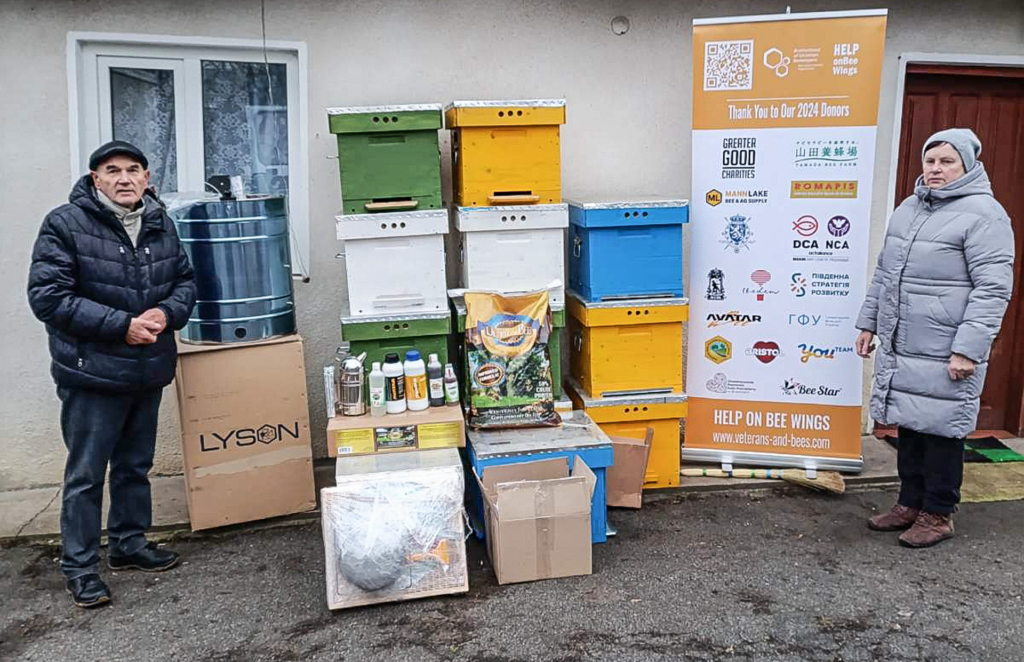
Almost a year later, the family returned to their village to find their home and all of their hives had been destroyed by shelling. Before the war, they had 110 hives, and beekeeping was their main source of income. Now, Olesya and Vadim had no way to provide for their family. With the help of Greater Good Charities, Olesya and Vadim received 20 bee packages, pollen, sugar, and medicine and were able to build new colonies.
Through partnerships with local organizations, we have provided enough food to sustain over 1.3 billion bees in Ukraine alone.
Establishing Habitat for Native Pollinators
Big change starts small.
When café owner Greg Konsor wanted to make a difference in his hometown of Holdingford, Minnesota, he turned a piece of his land along the Wobegon Trail into a vibrant pollinator habitat.
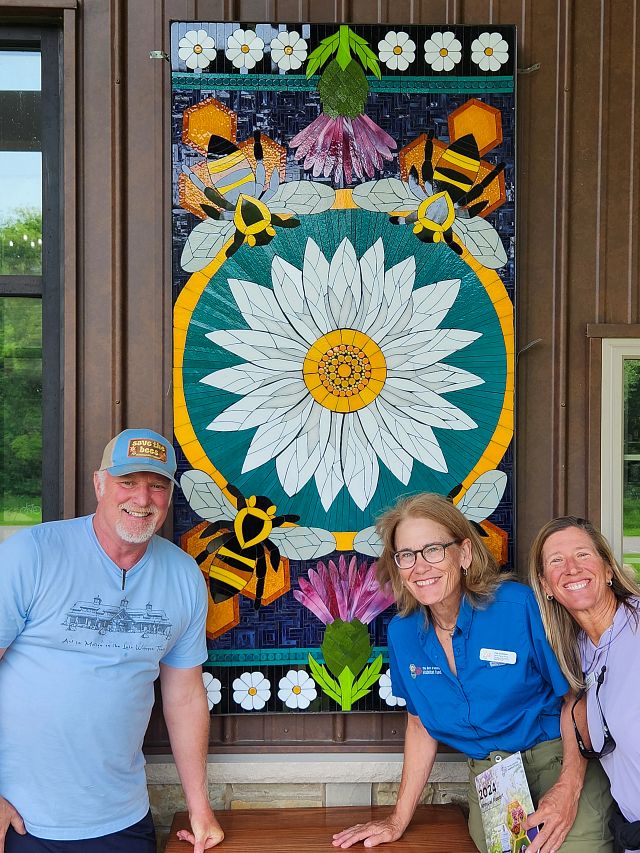
Now, his café’s customers and neighbors can see firsthand how wildflowers bring new life to the landscape––supporting bees, butterflies, and the community that depends on them. Inspired by the transformation, Greg started a new “Pedal for Pollinators” event to engage local bike riders along the trail and raise awareness about the vital role pollinators play in our food, soil, and environment.
“It’s amazing how one small project can spark something bigger,” Greg shared.
This work was made possible through a Greater Good Charities grant to support pollinator habitat development with the Bee and Butterfly Habitat Fund. To support pollinators, we’re helping provide essential seed mixes for bee and butterflies for habitat restoration projects. This year alone, we’ve helped create or improve 116.2 acres of pollinator habitat––and we’re far from done.
Greater Good Charities is also providing education, outreach, and guidance tools for communities by funding projects like the Monarch Joint Venture.
In partnership with Monarch Joint Venture, we’re enhancing pollinator habitats across the upper Midwest. By augmenting existing seed mixes with a broader diversity of plant species, we can improve grassland habitats for bees, butterflies, and other beneficial insects.
Diverse means more nectar, more pollen, and more nesting sites for essential pollinators.
This project also includes the creation of pollinator demonstration gardens to raise awareness about pollination. When it comes to protecting our environment, every spark of inspiration and every small transformation of land matters. Investing in education and community initiatives can lead to change on a global scale.
Beyond Bees: Rescuing Grey-Headed Flying Foxes
Bees aren’t the only essential pollinators that we’re protecting. In Australia, grey-headed flying foxes are vital for forest ecosystem health. Sometimes called “flying night gardeners” they contribute to the dispersal of seeds and the pollination of more than a hundred plant species.
They are currently listed as Vulnerable.
If large numbers of grey-headed flying fox pups are lost, a whole breeding season would be affected, resulting in a potential species uplist to Endangered. That’s why, when bushfires broke out across Australia and these bats were suddenly at risk of dying from heat stress, Greater Good Charities leapt into action.
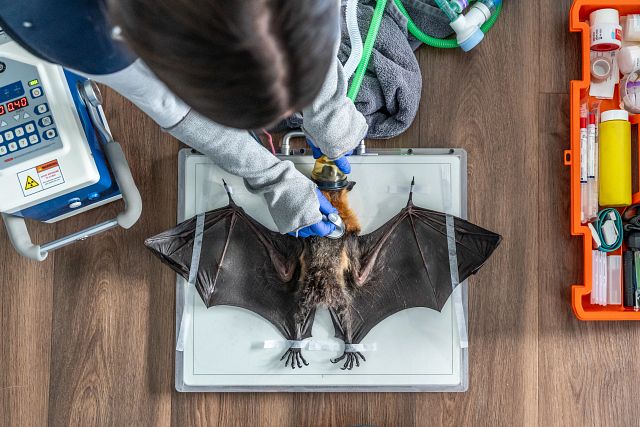
We partnered with Wildlife Victoria Inc. to purchase ready-to-go veterinary kits and portable water sprayers so trained specialists could rescue and heat treat grey-headed flying foxes. Until sweeping measures are taken to protect these bats on a federal level, this support is vital in maintaining their current species’ conservation status.
Bees, Butterflies, Bats––and Us
Protecting native pollinators is not simply about saving individual species. It is about maintaining the biological infrastructure that allows ecosystems to assemble, persist, and adapt over time.
Human food security depends on healthy ecosystems. Agricultural pollinators are responsible for $15 billion in U.S. crop value annually, a number that includes 130 different types of fruits, nuts, and vegetables.
Our environments need pollinators, our food supply relies on pollinators, and Greater Good Charities remains committed to protecting pollinators affected by disaster––along with promoting restoration, education, and healthy ecosystems to prevent ecological crises.