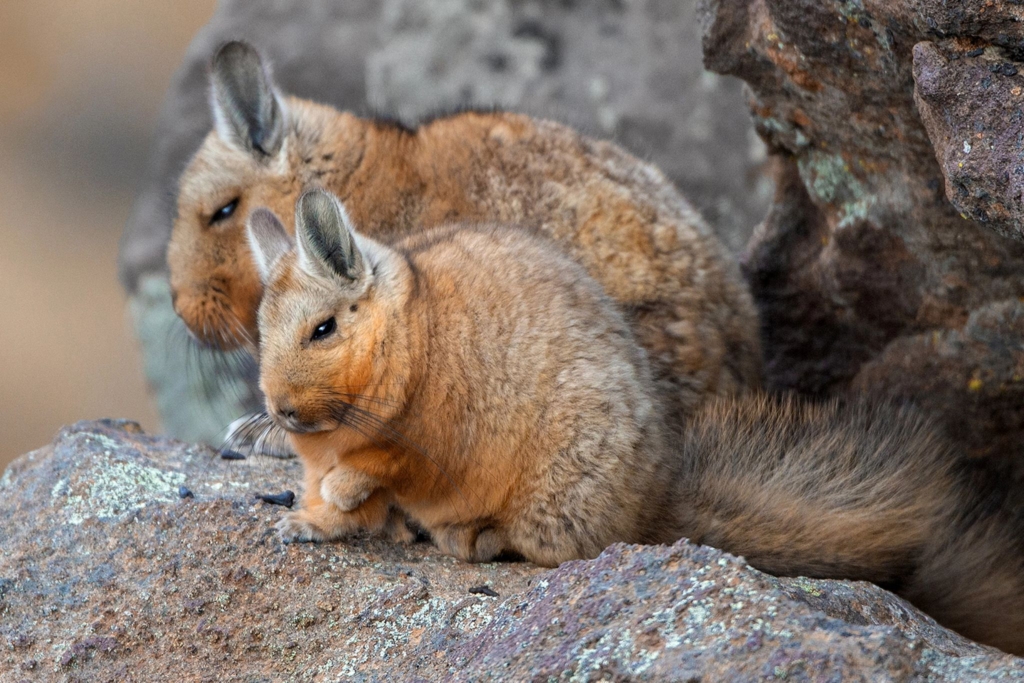
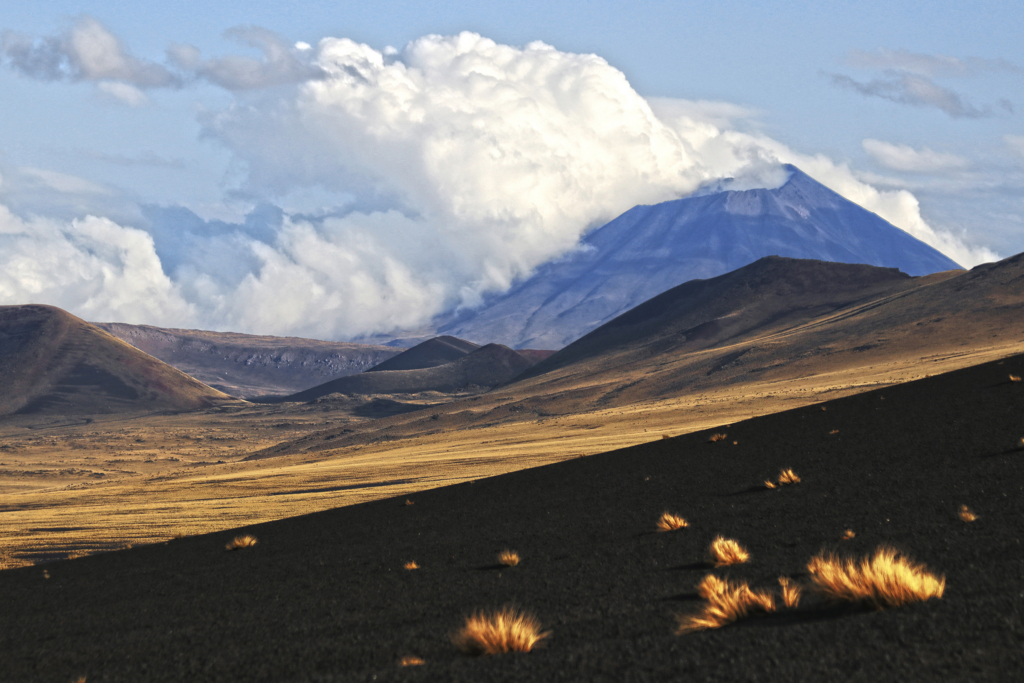
La Payunia Reserve is a proposed UNESCO site known for its striking volcanic landscape and vast, colorful lava plains that are black, copper, and reddish in hue. It’s home to a wide range of native plant and animal species that have adapted to its harsh, arid environment.
It’s also home to several endangered and vulnerable wildlife populations—including the guanaco, the Andean condor, and the Andean cat.
To protect these beautiful species permanently, Greater Good Charities took a unique approach: purchasing 150,000 acres (60,000 hectares) of private land to donate to La Payunia Provincial Reserve.
How does preserving land impact an entire ecosystem?
When a critical habitat is destroyed or degraded, the wildlife populations that call it home can experience population decline or extinction, disrupting an entire ecosystem. Preserving the biodiversity of a habitat—the animals, plants, bacteria, and fungi that exist within it—is essential for the long-term health of local communities, the environment, and the planet as a whole.
In La Payunia, generations of livestock grazing have led to habitat degradation in the region, impacting local ecosystems and threatening the health of its species.
As part of our Biodiversity & Conservation work, Greater Good Charities collaborated closely with local communities, government agencies, and other stakeholders over two decades to safeguard the region’s unique ecosystem while supporting local livelihoods. Part of this work was supporting three key land acquisitions totaling over 150,000 acres, ensuring their transfer into the reserve.
In March 2025, Greater Good Charities, in partnership with GreaterGood.com and Wildlife Conservation Society (WCS) Argentina, donated the land to La Payunia Provincial Reserve—one of the largest protected areas in the Patagonia steppe region.
The provincial government has recognized this conservation milestone and recategorized the donated lands as a Provincial Park. This historic land donation is significant because it sustains the world’s largest migratory population of guanacos, a herbivorous species that is vital to the ecological balance and biodiversity of the region.
What is a guanaco, and why is it a keystone species?
In La Payunia, guanacos are a keystone species primarily due to their migratory patterns, which help promote and sustain the entire integrity of the ecosystem. Their seasonal movements—including their feeding and seed dispersal activities—are part of ecological processes that contribute to the regeneration of the ecosystem. They also play a key role in the food chain, serving as a food source for predators like the puma and scavengers like the Andean condor.
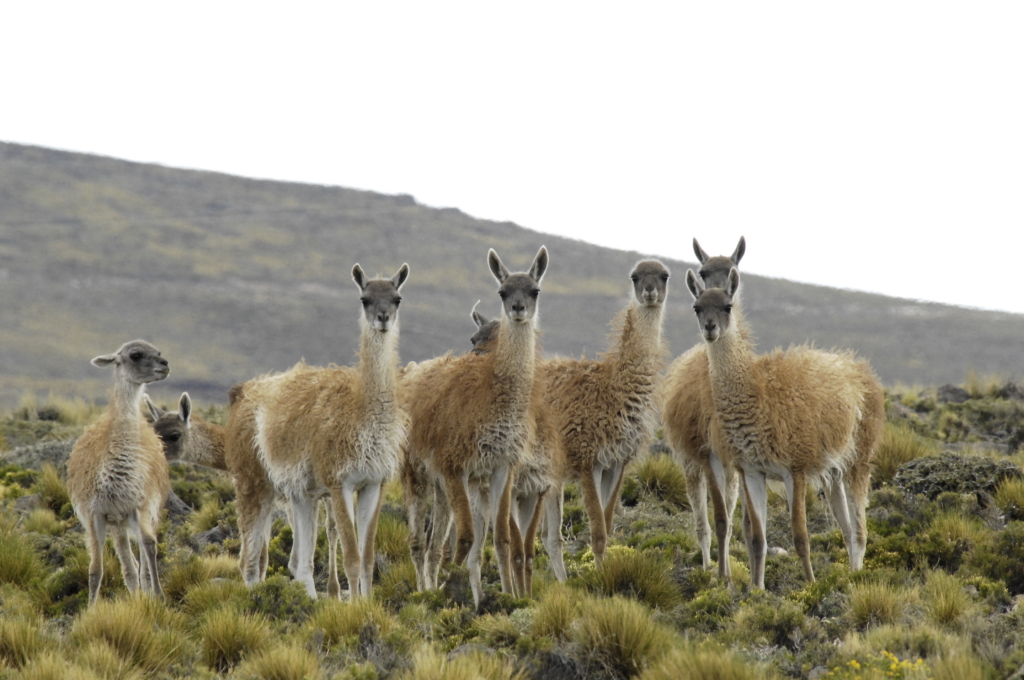
Guanacos require extensive and connected habitats to migrate. The most recent purchase and donation of 40,000 hectares secures much of their winter range, allowing them to travel up to 150 kilometers between the summer and winter months–without any interruption.
“It’s been an incredible achievement. This is the largest migration of guanacos in the world that we’re protecting in the key winter environment, so it’s amazing for the Payunia preservation and it’s wonderful land that is now going to be protected forever,” says Andres Novaro, director of terrestrial conservation at WCS Argentina.
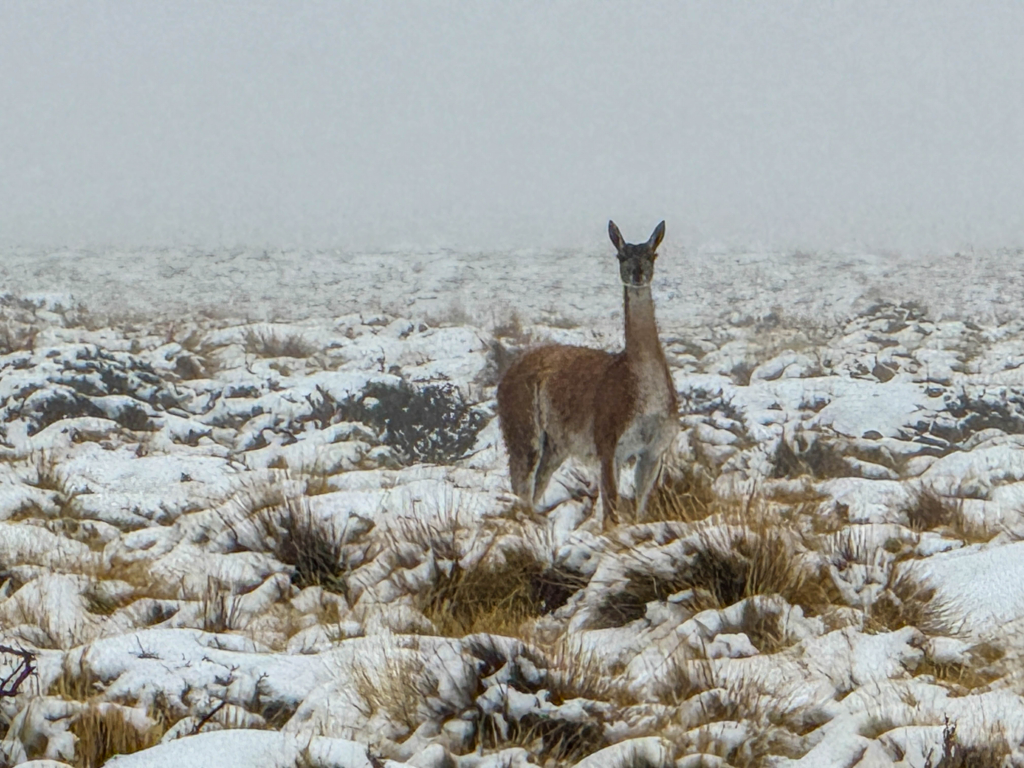
The preservation of this critical corridor for guanacos will ensure their survival, which, in turn, will help safeguard a range of unique and vulnerable wildlife, including the Andean cat, the Andean condor, the puma, the mountain viscacha, and other birds and mammals essential to the region’s food web.
Guanacos also hold a cultural significance for the people in the region. Their presence in La Payunia is intertwined with the history, livelihoods, and culture of local communities, dating back thousands of years. As Greater Good Charities engages with communities on conservation efforts, the guanaco has come to symbolize the powerful impact humans can have in protecting animals and the environment.
How will this critical habitat remain permanently protected?
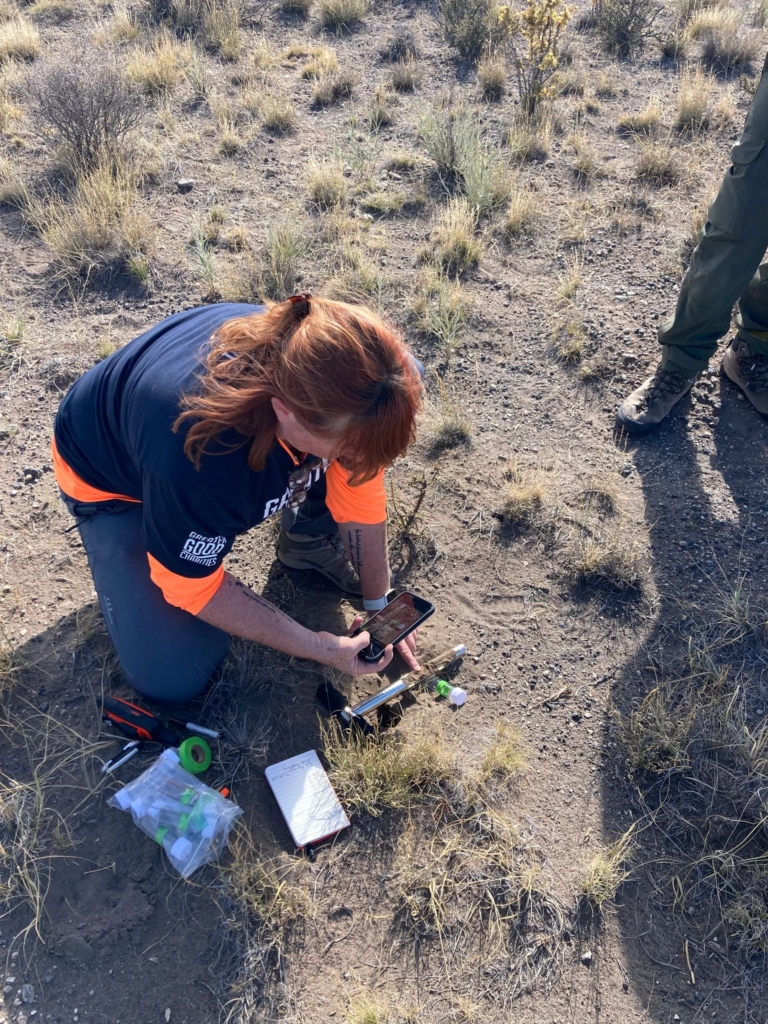
After the donated land was officially incorporated into the La Payunia Reserve, Greater Good Charities and WCS Argentina met on site in the newly protected area to focus on our next steps together. Working alongside local partners, we are collaborating on establishing a plan to rehabilitate overgrazed areas, rebuild native vegetation, and monitor species recovery.
During our field studies, we collected soil samples, positively identified species like the mountain viscacha, Darwin’s rhea, and the Andean Condor, and witnessed thousands of migrating guanaco. We are currently working with WCS Argentina to assess the land and its recovery to determine what further steps need to be taken to help restore this land to its former ecological glory. Our hope is to improve the habitat for the mountain viscacha, the primary food source of the critically endangered Andean cat.
Noah Horton, Chief Growth Officer at Greater Good Charities, shares: “We’re looking ahead to determine how we, together with our supporters, can do even more to ensure that in the coming years, this entire critical corridor will be safe under the stewardship of park rangers and those who will keep it protected.”
Expanding Our Efforts to Protect the Guanaco
Our protection of keystone species goes beyond land preservation. From February 19 to February 26, 2026, the Greater Good Charities Biodiversity & Conservation team joined forces with the Greater Good Charities Construction Team for a project to support the migration of guanacos.
The landscape surrounding the Lonco Vaca Volcano area in Argentina serves as an important wintering ground for guanacos––but the corridor is filled with dangers. Remnants of historical ranch infrastructure remain, including approximately 6 miles of interior fencing, pose a significant hazard to wildlife. Guanacos frequently attempt to jump the wires during migration.
The result is entanglement. Guanacos become trapped, injured, and are unable to escape.
Our team encountered heartbreaking evidence of this deadly phenomenon in the field. We knew we had to act.
We dedicated ourselves to removing 0.71 miles of fence within a corridor identified as posing the highest risk to guanaco movement across the La Payunia Preserve landscape. The team ultimately removed and recovered approximately 5 miles of wire from the site.
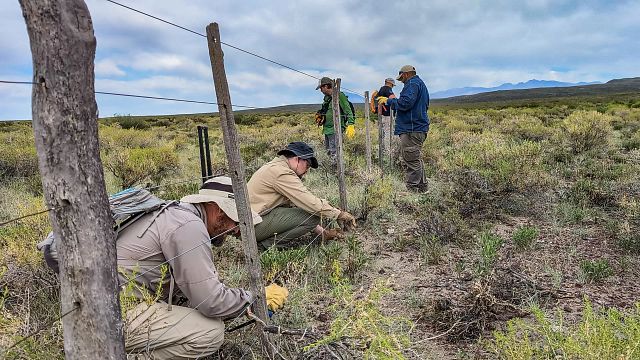
These materials will be repurposed to repair and reinforce perimeter fencing in areas experiencing peak cattle and goat intrusion. Properly maintained perimeter barriers help prevent domestic livestock from entering sensitive habitats and degrading the native vegetation that wildlife depend on.
Greater Good Charities also provided Wildlife Conservation Society – Argentina with ten additional game cameras to expand wildlife monitoring across the project landscape. In addition to monitoring guanaco movement, these cameras will support ongoing efforts to detect the rare Andean cat.
Together, the fence removal effort and expanded wildlife monitoring represent important steps toward protecting native species and strengthening conservation knowledge within the region.
Safeguarding Habitats for Future Generations
Greater Good Charities is committed to restoring and sustaining critical habitats and protecting species, always driven by the unique needs of local communities. Every day, we’re collaborating with scientific experts, local partners, and government agencies to conduct research and design responses that will have a lasting impact––for guanacos, mountain viscachas, and so many species around the globe.