Our planet is a tapestry of life. Millions of species––plants, animals, fungi, and protists––must live together, depending on one another for survival. That is called biodiversity.
But now, with up to one million species at risk of extinction, biodiversity is under threat. Climate change, habitat fragmentation, illegal trafficking, pollution, and over-exploitation threaten the balance of life across the globe.
That’s why, in June of 2023, Greater Good Charities expanded our existing Madrean Discovery Expeditions program with the goal of protecting biodiversity around the world.
Now, we lead scientific studies in key biodiversity areas, uniting multinational teams of scientists from a variety of fields, students, and local experts to observe, document, and study native plants and animals in biodiversity hotspots under imminent threat.
Rare Lizard Sightings in the Madrean Archipelago
Our work to protect biodiversity began in the Madrean Sky Islands.
Also known as the Madrean Archipelago, the Sky Islands are a series of 57 isolated mountain ranges that stretch from Arizona and New Mexico to Sonora, Mexico. Each Sky Island contains a plethora of miniature ecosystems, making them some of the most biologically rich and diverse regions around the world. These hot spots are home to more than a hundred mammals ranging from elusive jaguars and ocelots to endangered bats, turtles, butterflies, lizards, and more.
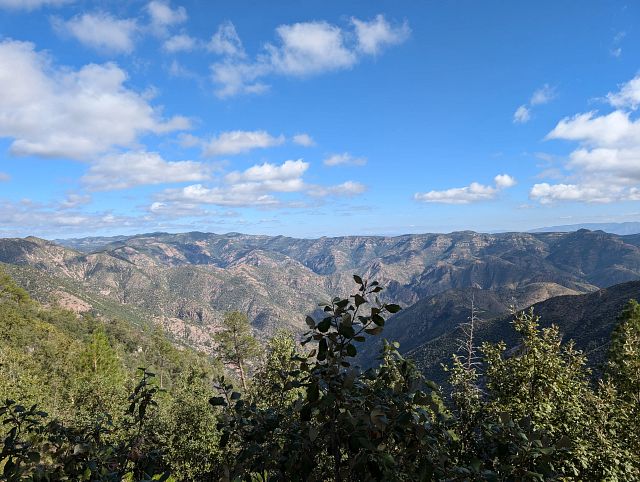
For over a decade, Greater Good Charities has worked to research, study, and conserve this region, recording hundreds of thousands of biodiversity records. Volunteer scientists and naturalists helped document plant and animal species in this understudied region, including species lost to science, animals such as mountain lions, jaguars, ringtails, ocelots––and the elusive Ditmar’s Horned Lizard.
Originally discovered in 1898, the Ditmar’s Horned Lizard went missing for 73 years. In 2013, on a Greater Good Charities sponsored field study, one of our volunteers, Dale Turner, discovered what he thought was a Ditmar’s. DNA tests verified this thought, and just like that the lizard was no longer lost to science.
Our work continued. Sightings were still incredibly rare, but our teams got better at locating them. And then, Josè Abel, a Madrean Discovery Expeditions scholarship recipient, photographed 11 individuals on Rancho Las Playitas in 2019.
Because of Josè Abel’s incredible work, we were able to hold a mini expedition in 2019 in Las Playitas to learn more about the life history of this rare lizard. For nine days, a team of volunteer herpetologists studied the Rock Horned Lizard in its natural habitat.
Our study of the Ditmar’s Horned Lizard has continued. In 2025, we returned to Sonora to capture a sample of Rock Horned Lizards to start a breeding program in partnership with Zoo Miami. Programs like these are essential in furthering our understanding of a species and a largely understudied region.
Vietnam and the Fight to Save the Pangolin
Vietnam is one of the 16 most biodiverse countries in the world.
The region provides habitat for more than 13,000 species of land-based plants, more than 10,000 species of land-based animals, 39 types of wetlands, 20 marine ecosystems, and more than 11,000 marine species.
Since 2023, Greater Good Charities has made several expeditions to Vietnam to research and support conservation activities in partnership with Wildlife At Risk and the Institute of Ecology and Biological Resources in Vietnam.
In March of 2024, our team embarked on a ten-day mission at the Dong Son-Ky Thuong Nature Reserve in Quảng Ninh survey the nature reserve, build our collective knowledge of this special place, and document any ecological shifts from previous data collections.
The team camped alongside the Binh Huong River, set traps for bats, small mammals, and fish, and took a total of 6,100 photos during their six days in the field. This content is used to educate the public and implement conservation activities and protections around the world.
Vietnam is also home to the most trafficked mammal in the world––the pangolin.
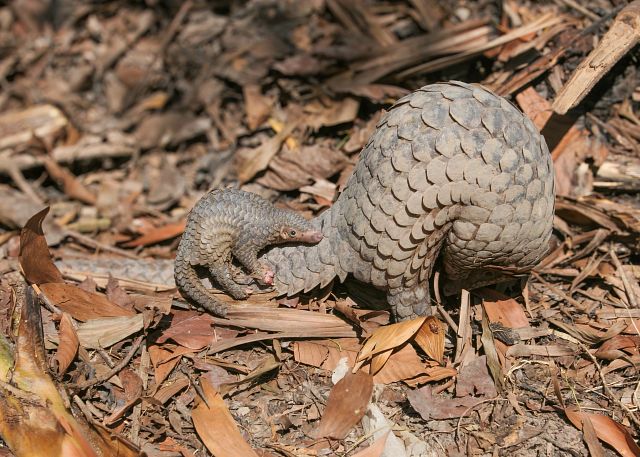
Pangolin populations are rapidly declining in both Asia and Africa because poachers illegally trap, traffic, and kill them for their scales. Without intervention, they could go extinct within 10 to 30 years.
To protect pangolins rescued from illegal poaching, Greater Good Charities partnered with Wildlife At Risk to fund the creation of two pangolin enclosures and provide food for rescued pangolins. In addition to being a space for healing, the enclosures also serve as a breeding program.
With every pangolin rescued and each pangolin pup born in the facility, the species is given a greater chance of survival.
Protecting Our Planet, Piece by Piece
“I think we should all get out and thoughtfully explore the amazing ecosystems and wildlife our planet offers” – Casey Paholski, Greater Good Charities’ Senior Program Manager for Biodiversity & Conservation programs.
Protecting our environment means protecting each part of it––from the tiniest insect to jaguars, from pangolins to guanacos. Every species is essential to the balance of life on earth.
To date, our team has logged over 200,000 records, engaged 49 schools, and completed 44 biodiversity studies.
As we head into our 21st year, Greater Good Charities remains dedicated to conserving our environment for future generations and protecting biodiversity around the globe.